
There are few things more frustrating than switching on the AC during a hot afternoon and realizing the room is still warm after an hour.
The fan is running. The display looks normal. Everything seems fine.
Yet the cooling just isn’t there.
Many people immediately assume the unit needs gas filling. Sometimes that’s true. But not always.
In fact, one of the most common mistakes is refilling AC gas without identifying why the gas level dropped in the first place. If a leak exists, the newly filled gas may escape again, leaving the same problem right back where it started.
So how do you know whether your AC simply needs a refill or whether a repair should come first?
Let’s break it down in simple terms.
Why AC Gas Leakage Should Never Be Ignored
An air conditioner works through a closed refrigeration cycle. The refrigerant gas continuously circulates inside sealed pipes and components.
Under normal conditions, the gas does not get “used up.”
That’s a point many people find surprising.
If gas levels are low, it usually means the refrigerant has escaped through a leak somewhere in the system. Ignoring that leak can reduce cooling efficiency, increase electricity consumption, and put additional strain on critical AC components.
A small leak today can become a much bigger repair tomorrow.
What AC Gas Actually Does?
Think of refrigerant gas as the cooling carrier inside your air conditioner.
It absorbs heat from indoor air and releases it outside. Without sufficient refrigerant, the AC struggles to remove heat effectively.
The result?
- Poor cooling.
- Longer running times.
- Higher power consumption.
And eventually, more wear on the system.
That is why diagnosing refrigerant-related issues correctly is so important.
Common Signs of AC Gas Leakage
AC Is Cooling Less Than Before
This is often the first warning sign.
You set the temperature to 24°C, but the room never feels comfortable. The AC keeps running longer than usual without delivering proper cooling.
Many people dismiss this initially.
A week later, the cooling becomes even weaker.
That gradual decline often points toward refrigerant loss.
Ice Formation on Copper Pipes
It sounds strange.
If cooling is weak, why would ice form?
Low refrigerant pressure can cause certain sections of the evaporator coil or copper tubing to become excessively cold, leading to frost or ice buildup.
If you notice frozen pipes, it is time for professional inspection.
Hissing or Bubbling Sounds
An AC should not make hissing sounds.
A faint hissing noise can indicate refrigerant escaping through a small opening. In some situations, bubbling sounds may also occur.
While not every unusual sound means a gas leak, it should never be ignored.
AC Runs Continuously
When refrigerant levels fall, the system has to work harder to reach the desired temperature.
As a result, the compressor keeps operating for longer periods.
The room stays warm.
The electricity bill climbs.
And the cooling performance continues to decline.
Higher Electricity Consumption
Many people focus only on cooling.
But energy usage often tells an important story.
A struggling AC typically consumes more electricity because it operates for longer cycles while delivering less comfort.
When an AC Needs Gas Refilling
Not every low-gas situation requires major repairs.
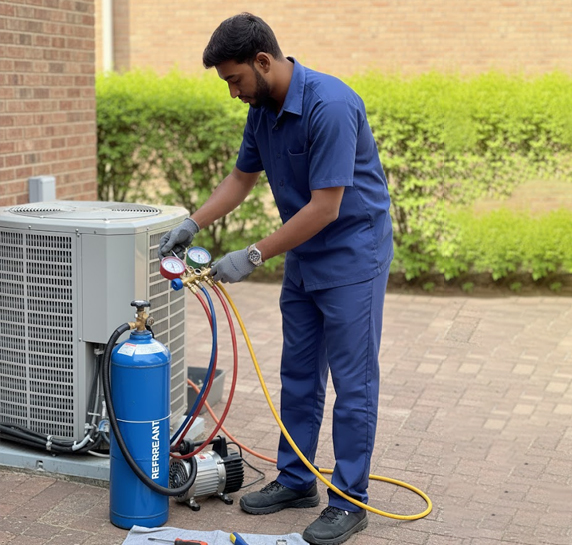
There are cases where professional inspection confirms refrigerant loss and recommends gas refilling after the system has been checked properly.
A refill may be appropriate when:
- Refrigerant levels are verified to be low
- The leak source has already been repaired
- Maintenance work required refrigerant recovery and recharging
- Pressure readings indicate insufficient refrigerant
In such situations, gas refilling helps restore normal cooling performance. Experts Ways provides AC gas filling services along with inspection and repair support when required.
When Repair Must Come Before Refilling
This is where many people spend unnecessary money.
Imagine filling a punctured bicycle tire without fixing the puncture.
The air escapes again.
The same logic applies to AC refrigerants.
Visible Refrigerant Leakage
If technicians identify a leak in coils, joints, connectors, or copper piping, repairs should come first.
Otherwise, the newly filled refrigerant may leak out again.
Damaged Copper Tubing
Over time, copper pipes can develop wear, corrosion, or physical damage.
Refilling gas without addressing damaged tubing is usually a temporary solution.
Faulty Connections
Loose or damaged connections can allow refrigerants to escape slowly.
Repairing those points is essential before recharging the system.
Repeated Gas Refills
If an AC requires frequent gas filling, there is likely an underlying issue.
A healthy AC system should not need regular refrigerant top-ups.
When gas refilling becomes a recurring expense, leak detection should become the priority.
Why Simply Adding Gas Is Often a Mistake
A surprising number of cooling complaints come from this exact situation.
Someone notices weak cooling.
Gas is added.
Cooling improves briefly.
A few weeks later, the same problem returned.
What happened?
The leak was never repaired.
Proper diagnosis is often more valuable than rushing into a refill.
An experienced technician focuses on identifying the root cause rather than treating only the symptom.
Understanding AC Gas Refilling Cost
One of the most searched questions is about AC Gas Refilling Cost.
The truth is that costs vary depending on several factors.
Different AC models use different refrigerants.
The amount of refrigerant required can vary.
The condition of the system also matters.
That is why a professional inspection is usually necessary before giving an accurate estimate.
Rather than focusing only on the immediate AC Gas Refilling Cost, it is often smarter to understand whether a leak repair is required first. Otherwise, the same expense may return again.
Factors That Affect AC Gas Charges
Several elements influence Ac gas filling charges.
Type of Refrigerant
Different refrigerants have different pricing structures and availability.
AC Capacity
Larger systems generally require more refrigerant.
Leak Detection Requirements
If leak testing is needed before gas filling, service requirements may differ.
Repair Work
When damaged components require repair before recharging, overall service costs can change.
These factors also influence the final ac gas refill price.
Split AC vs Window AC Gas Filling
Many homeowners also ask about split ac gas filling cost and window ac gas filling cost.
While both systems use refrigerant, the service process can differ because of design and accessibility.
Split AC Systems
Split AC units involve indoor and outdoor components connected through refrigerant piping.
Leak detection may require inspection of multiple connection points and tubing sections.
As a result, the split ac gas filling cost depends on the overall system condition and refrigerant requirements.
Window AC Systems
Window units have a more compact design.
However, leak detection and refrigerant charging still require proper technical evaluation.
The final window ac gas filling cost varies according to the unit’s condition and service needs.
How Professionals Detect AC Gas Leaks
Professional leak detection goes beyond guesswork.
Technicians typically inspect:
- Copper piping
- Refrigerant joints
- Indoor coils
- Outdoor coils
- Valve connections
- Pressure readings
This step helps determine whether the issue is refrigerant loss, component damage, or another cooling-related fault.
Experts Ways provides repair and maintenance support designed to identify cooling issues accurately before recommending solutions.
Tips to Prevent Future Gas Leakage
No AC is completely immune to wear.
Still, a few simple habits can help reduce future problems.
Schedule Periodic Maintenance
Routine inspection helps identify small issues before they become expensive repairs.
Address Cooling Issues Early
Don’t wait for cooling performance to collapse completely.
Minor symptoms often reveal larger problems developing behind the scenes.
Avoid Unqualified Repairs
Improper servicing can sometimes damage refrigerant lines or connections.
Pay Attention to Unusual Sounds
Hissing, bubbling, or persistent performance changes should be checked promptly.
Why Timely AC Service Matters
- Many cooling problems begin quietly.
- A slight reduction in cooling.
- A small increase in electricity usage.
- An occasional noise.
- Then one day the AC stops performing altogether.
Timely service helps identify refrigerant issues, component wear, and airflow problems before they escalate.
That not only improves comfort but may also help avoid larger repair expenses in the future.
How Experts Ways Helps Restore Cooling Performance
When an AC shows signs of refrigerant-related issues, proper diagnosis matters more than assumptions.
Experts Ways offers AC repair services, AC maintenance, AC installation support, and AC gas filling services across Hyderabad. Their technicians inspect cooling systems, identify performance issues, and recommend the appropriate solution based on the actual condition of the unit. They also provide refrigerator repair services for households experiencing cooling appliance problems.
Whether the issue involves gas leakage, reduced cooling efficiency, or general AC performance concerns, the focus should always be on fixing the root cause first.
Final Thoughts
When cooling drops, the immediate reaction is often to search for ac gas filling charges or compare the latest ac gas refill price.
That makes sense.
After all, everyone wants a quick solution.
But the smarter question is often this:
“Why did the gas level drop in the first place?”
If the refrigerant escaped because of a leak, repair should come before refilling. Otherwise, the same problem is likely to return.
A professional inspection can help determine whether the unit needs gas charging, leak repair, or another corrective service altogether.
In the long run, understanding the difference between gas refilling and leak repair can save money, improve cooling performance, and help your AC operate more efficiently throughout the year.
Leave a Reply